
Table of Contents
Normal Winter Frost vs. Catastrophic Ice Buildup
During winter heating operation, your outdoor heat pump coil functions as an evaporator. To pull heat from outdoor air, the refrigerant circulating through the outdoor coil must be colder than the ambient air—often dropping to 15°F to 25°F.
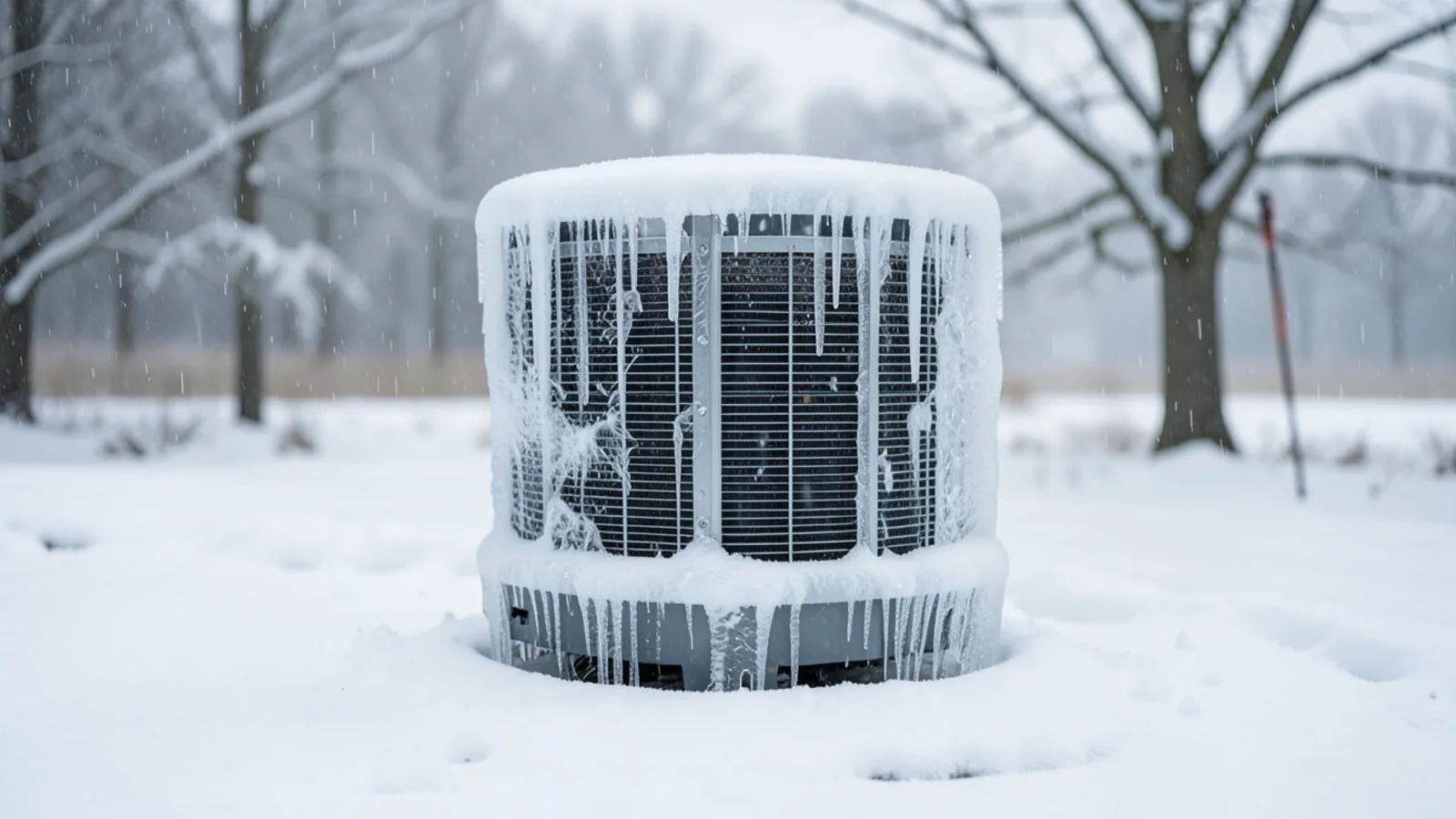
As humid Carolina winter air passes through the coil, moisture naturally condenses and freezes onto the aluminum fins. A light, even dusting of white frost across the outdoor coil is completely normal. In fact, modern heat pumps are engineered specifically to handle this frost through an automated defrost cycle that runs every 30, 60, or 90 minutes.
However, when you see thick, solid blocks of opaque ice encasing the entire cabinet, ice bridging the gap between the coil and the fan motor, or the top discharge grille crushed by ice sheets, your system is in critical distress. Solid ice blocks all airflow, suffocating heat transfer and forcing liquid refrigerant back into the compressor, which can destroy the motor bearings within hours.
Experiencing This HVAC Issue Right Now?
Our Raleigh diagnostic technicians can inspect your system today. Call (321) 666-8870 for confirmed arrival windows.
Upfront Written Quote
Before any repair starts
Same-Day Dispatch
When booked by noon
Transparent Diagnostics
$75–$145 full test fee
Midtown Raleigh Hub
4800 Six Forks Road
How the Heat Pump Defrost Cycle Actually Works
Understanding the defrost cycle helps you distinguish between healthy system operation and a failed component:
1. Initiation: A temperature sensor or electronic timer on the outdoor defrost control board detects that the coil temperature has dropped below freezing (typically 32°F) for a cumulative run time of 30 to 90 minutes.
2. The Reversal: The four-way reversing valve shifts the heat pump temporarily into cooling mode. Hot, high-pressure discharge gas is diverted straight into the outdoor coil, rapidly melting the frost.
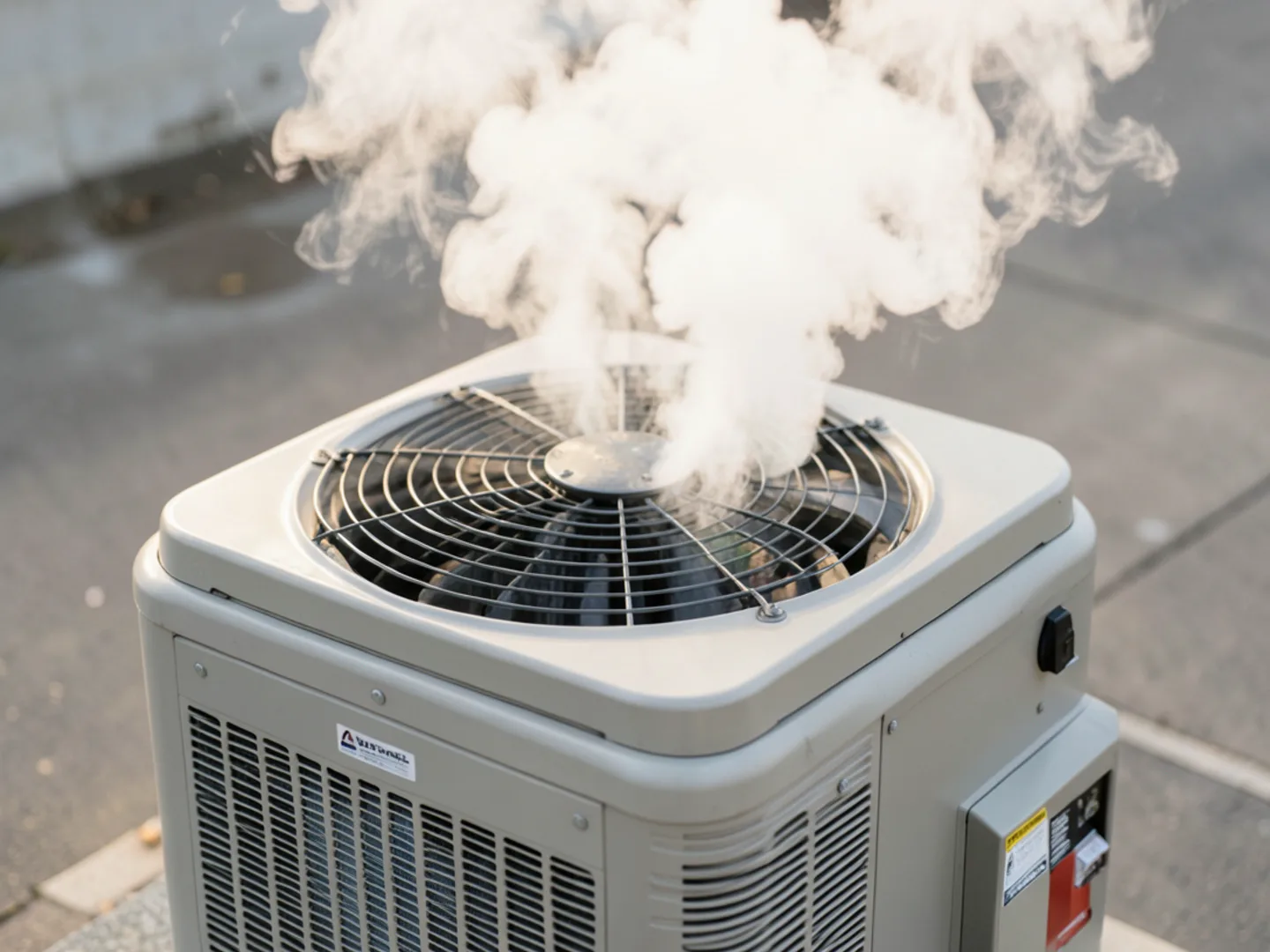
3. The Steam Cloud: The outdoor fan motor shuts off during defrost to concentrate heat within the cabinet. As ice melts against hot coils, thick clouds of water vapor and steam billow from the unit, accompanied by a loud whooshing sound. Many homeowners mistake this steam for smoke and panic—it is actually proof that the defrost cycle is working perfectly!
4. Termination: When the defrost sensor reaches approximately 55°F to 65°F, or after a maximum safety override of 10 to 14 minutes, the system reverses back into heating mode and the outdoor fan resumes spinning.
What Causes a Heat Pump to Freeze Solid in Freezing Rain?
When severe ice storms strike the Triangle, four primary factors cause systems to become hopelessly frozen:
1. Freezing Rain and Gutter Runoff: If an uncleaned roof gutter overflows directly above the outdoor condensing unit, freezing water drips continuously onto the running fan blades and coil, building ice faster than the defrost cycle can melt it.
2. Failed Defrost Control Board or Sensor: Electronic defrost boards can suffer relay failures, or the defrost thermostat bulb clamped to the copper coil tube can lose thermal contact, preventing the cycle from ever initiating.
3. Failed Outdoor Fan Motor: If the outdoor fan motor seizes or its capacitor fails, airflow stops completely. The coil temperature plummets, freezing atmospheric moisture into solid ice within 30 minutes.
4. Low Refrigerant Charge: A leak in the refrigeration system lowers operating pressures, causing the coil to run abnormally cold and freeze rapidly even in mild 40°F weather.
Safe Steps Homeowners Can Take Right Now
If your outdoor heat pump is encased in heavy ice, take these immediate protective actions:
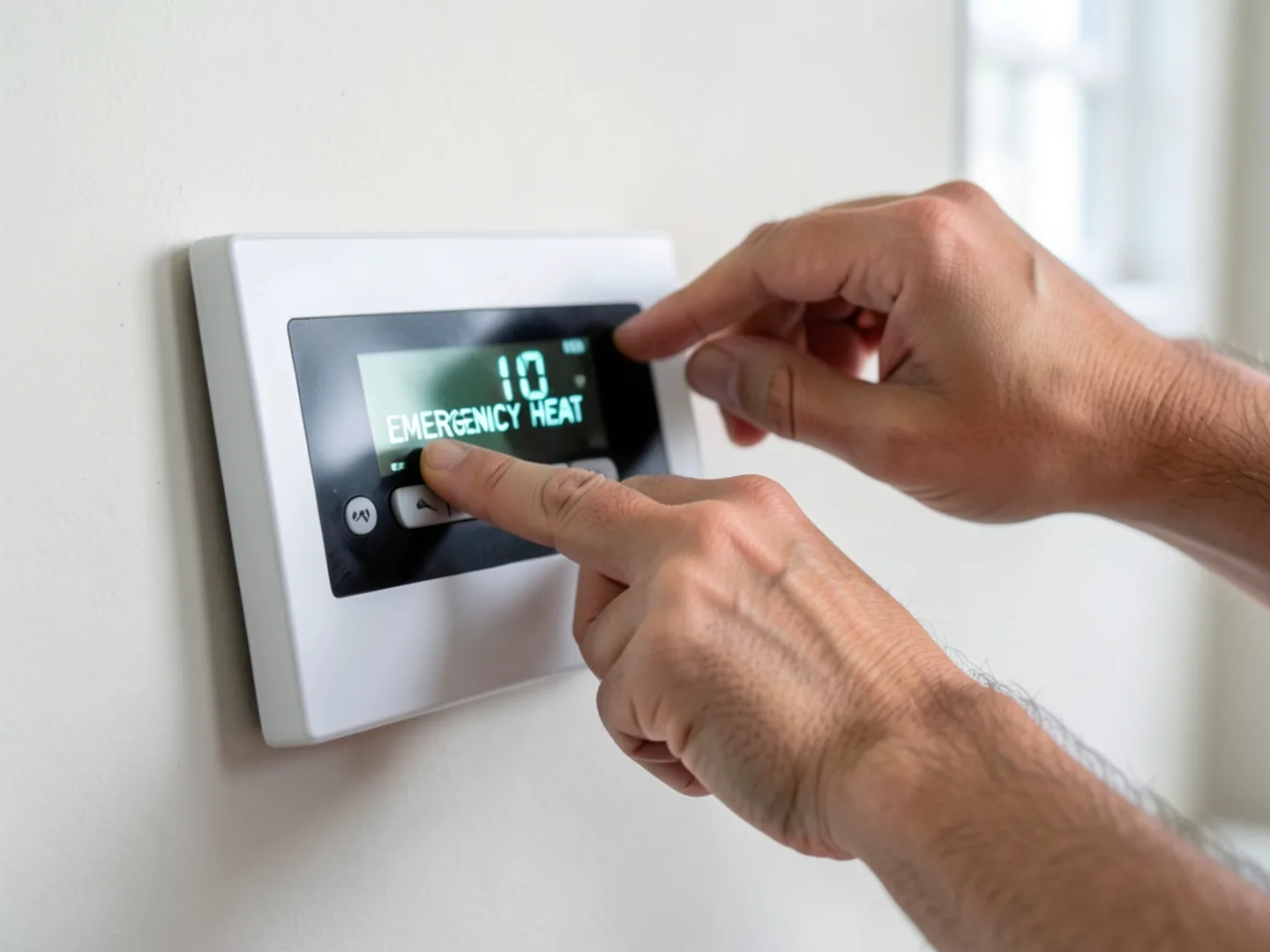
Step 1: Switch to 'Emergency Heat': Walk to your thermostat and switch the system mode from 'Heat' to 'Emergency Heat' (or 'Aux Heat'). This turns off the outdoor compressor completely, eliminating the risk of mechanical burnout, while engaging indoor electric heat strips to keep your home warm.
Step 2: Clear Snow and Debris Around Cabinet: Gently clear heavy snow drifts, fallen pine branches, and leaves from around the base of the outdoor unit to ensure at least 18 inches of clear perimeter airflow.
Step 3: Clear Gutter Drips: If a roof valley or clogged gutter is dripping water onto the top of the unit, temporarily redirect the drip or clear the blockage.
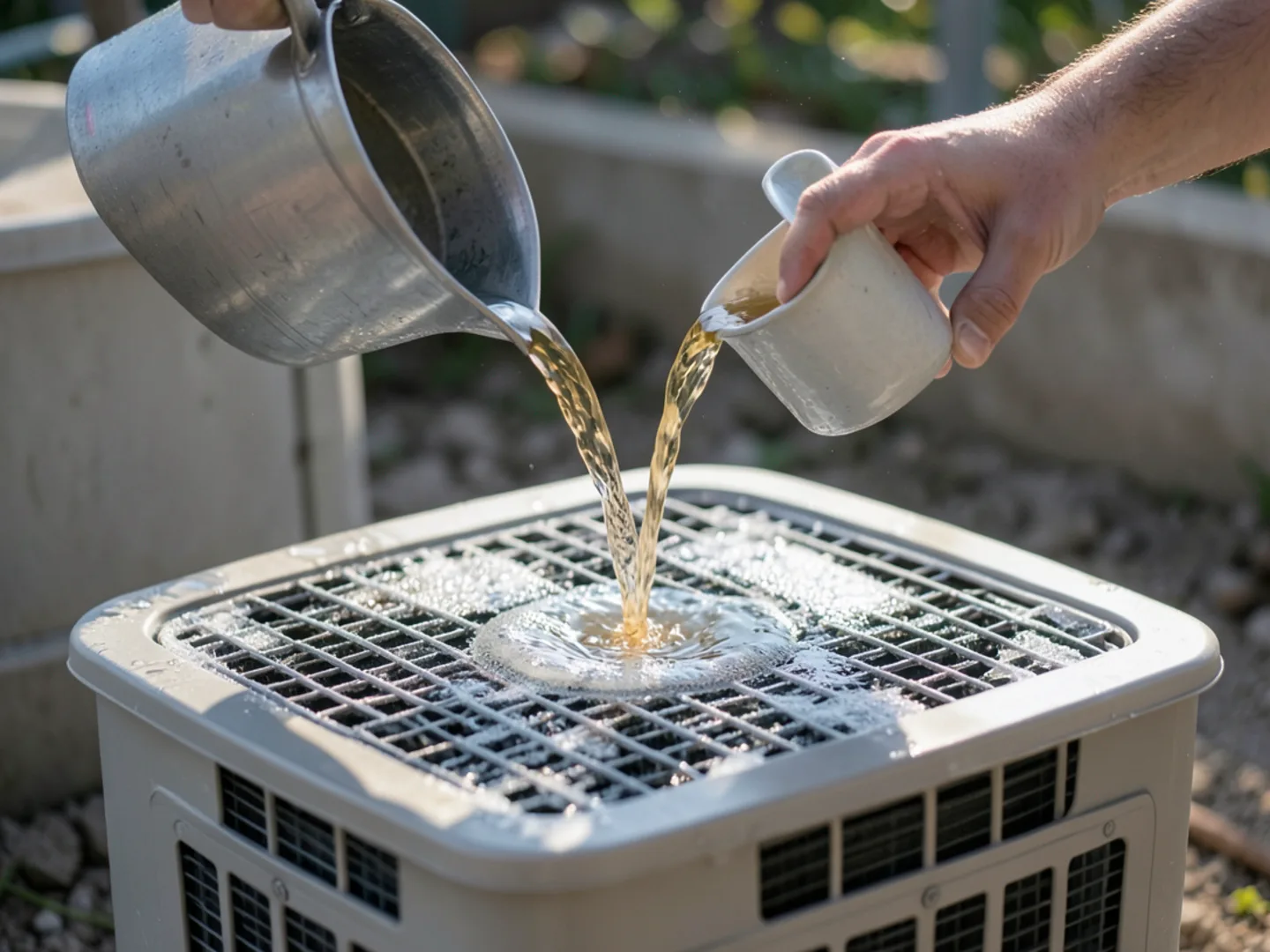
Step 4: Use Warm Water (Never Sharp Tools): If you want to melt surface ice safely, pour buckets of lukewarm water over the coil fins. Never use boiling water, which can cause thermal shock to cold copper, and never use sharp metal tools or hammers to chip at ice.
Professional Diagnostic Service Across Raleigh and Durham
If your heat pump does not clear its ice after switching modes or repeatedly freezes over within hours of thawing, professional diagnosis is required.
Quality Heat and Air provides rapid winter dispatch throughout Raleigh, Cary, Apex, and Durham. Our technicians test defrost sensors, verify reversing valve operation, check refrigerant pressures, and restore safe, reliable heating.
Need Professional Heating or AC Service in Raleigh?
Call (321) 666-8870 to schedule your diagnostic visit. Dispatched from North Hills across Wake County and Durham.
Upfront Written Quote
Before any repair starts
Same-Day Dispatch
When booked by noon
Transparent Diagnostics
$75–$145 full test fee
Midtown Raleigh Hub
4800 Six Forks Road